
If you own a small business, you already wear several hats. You're the boss, the salesperson, sometimes the accountant, and often the person who steps in when something needs doing. Marketing can easily end up at the bottom of the list.
But think about how you shop. When you need a plumber, a salon, or a place to order a cake, you probably take out your phone, search Google, check reviews and perhaps look at Instagram. Your customers do the same. If your business is difficult to find online, potential customers may choose a competitor instead.
That is where digital marketing helps. It puts your business in front of people when they are looking for a product or service. You do not need a huge budget to begin; you need a clear goal and the right channels.
So, what is digital marketing, really?
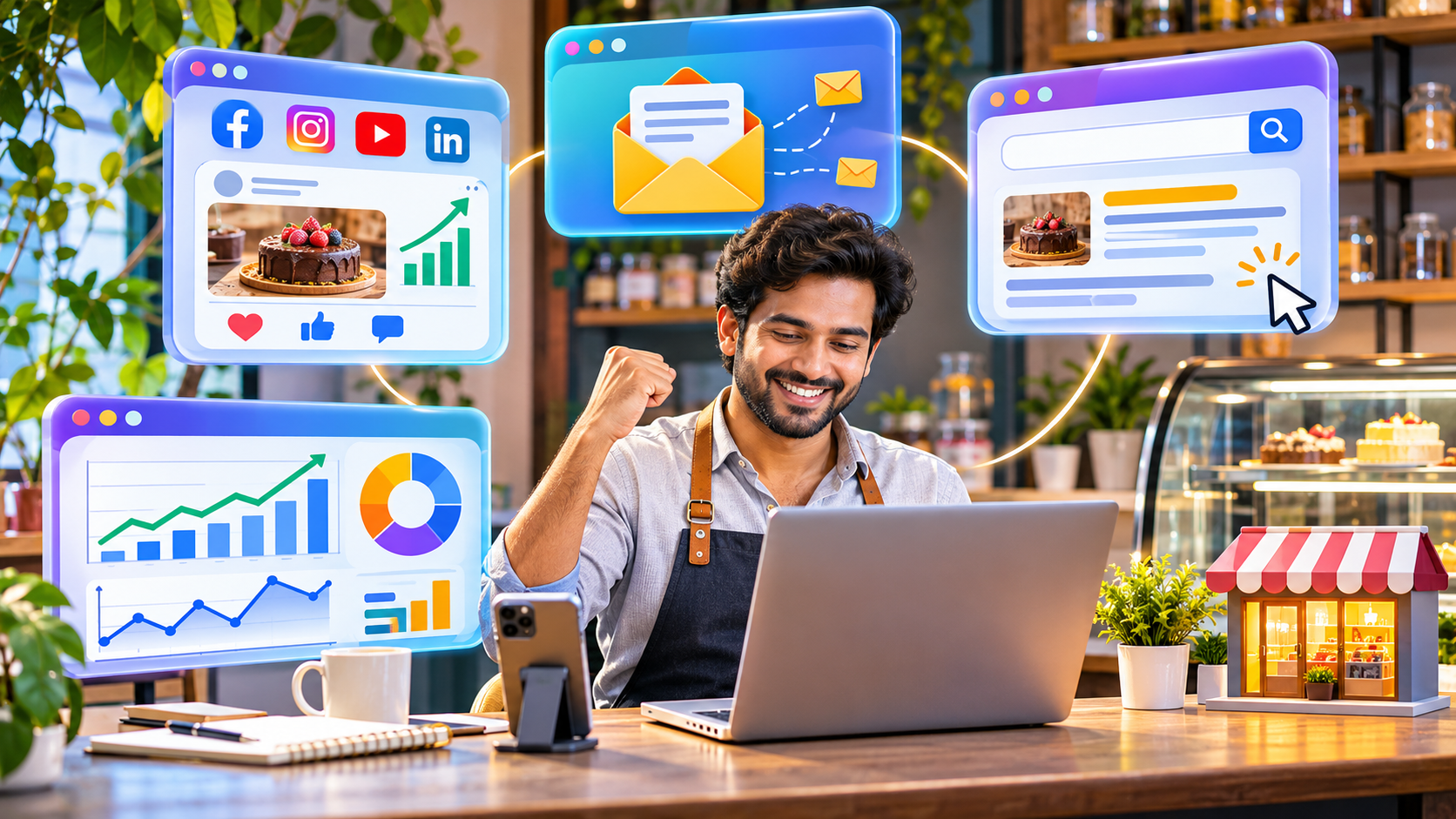
Digital marketing simply means promoting your business online. Instead of relying only on newspaper advertisements, pamphlets and hoardings, you use the internet: search engines, social media, email and your own website.
Common digital marketing channels include:
- SEO: Helps your website appear in organic search results.
- Google Ads: Paid advertising that can show your business to people searching for your services.
- Facebook and Instagram Ads: Help you reach selected audiences.
- Social media marketing: Builds awareness and relationships through useful posts and videos.
- Website development: Gives customers a place to understand your business and contact you.
- Content marketing: Uses blogs, guides and videos to answer customer questions.
- Email marketing: Keeps in touch with people who have agreed to receive updates.
- Mobile app marketing: Promotes an app when an app genuinely supports the business model.
For example, someone searching for an interior designer nearby may find your website, view your completed projects and call you. Or a person scrolling Instagram may see a kitchen makeover video and save your post for later.
How does digital marketing work?
Think of it as four simple steps: decide who you want to reach, choose the online channels they already use, share something useful, and make the next step easy. That next step might be a phone call, WhatsApp message, enquiry form, store visit or purchase.
Why small businesses need digital marketing
1. You can reach more people
Your shop may be on one street, but the internet can help people discover it from other neighbourhoods or cities. A boutique can reach customers through Instagram, while a consultant can attract clients across India through search engines.
You can also narrow campaigns by location, interests, age group and online behaviour. This helps you focus on people who are more likely to need what you offer.
2. You can start with a manageable budget
Newspaper and television advertising may require substantial upfront spending. Online, you can begin with a small daily ad budget, improve your website SEO gradually, publish useful social media posts or test one focused Facebook or Instagram campaign.
Not every campaign will bring sales on day one. The advantage is that you can review the results, learn what works and adjust your spending instead of relying on guesswork.
3. You can build customer trust
Customers often need a few signals before contacting a business. They may see an Instagram post, visit your website later and read customer reviews before deciding. A consistent online presence helps your business become familiar and credible.
Keep your business name, logo, phone number and address consistent across your website, social media and business listings. Small inconsistencies can make customers hesitate.
4. You can attract better-quality leads
A thousand visitors who never buy may be less valuable than ten people who genuinely need your service. An agency can reach business owners searching for SEO help, a coaching institute can speak to students and parents, and a property dealer can focus on buyers in a particular area.
Use a relevant landing page, enquiry form or WhatsApp button so interested visitors can contact you easily. Focus on the right enquiries, not just website traffic.
5. You can compete with bigger businesses
You may not have the budget of a national brand, but you do not need to outspend one. A local bakery can showcase speciality cakes, improve its local search visibility and encourage genuine customer reviews. When nearby customers search for a bakery, the business has a chance to be discovered.
Choose a clear audience, a specific service area and the thing your business does especially well.
6. You can communicate directly with customers
Comments, direct messages, WhatsApp, emails and enquiry forms give customers a way to ask questions and share feedback. Pay attention to repeated questions. If customers regularly ask about delivery charges, add the information to your website FAQ or social posts.
Quick, clear and honest replies can improve the customer experience and encourage repeat business.
7. You can measure what is working
Digital platforms can show useful information such as website visitors, traffic sources, ad impressions, clicks, enquiry submissions, calls, WhatsApp messages, cost per lead and online purchases.
Tools such as Google Analytics, Google Search Console and advertising dashboards help you understand performance. Do not focus only on clicks and impressions. Track enquiries and sales as well.
8. Local customers can find you
Local searches such as “salon near me”, “best electrician in Delhi” or “restaurant in Sarita Vihar” often come from people who want a nearby solution. Local SEO can help your business become more visible in those searches.
- Set up and maintain your Google Business Profile.
- Keep your opening hours, phone number and address accurate.
- Upload genuine photos of your business, products and work.
- Ask satisfied customers for honest reviews.
- Create useful location-specific website pages where relevant.
- Keep your business details consistent across online platforms.
Digital marketing strategies that suit small businesses
You do not need to use every channel. The right mix depends on your industry, customers, location, competition and budget.
SEO
Search engine optimisation makes your website easier for Google to understand and recommend. If you are a plumber in Delhi, you may want to appear when someone searches for a plumber in Delhi. SEO includes keyword research, technical improvements, useful content and building website credibility. It takes time and results are not guaranteed, but a strong SEO foundation can support long-term visibility.
Social media marketing
Facebook, Instagram, LinkedIn and YouTube let you show your products, services and expertise. Share product photos, short videos, customer feedback, offers and useful tips. Choose the platforms your customers actually use instead of trying to be everywhere.
Google Ads and paid advertising
Google Ads can show your business to people actively searching for what you sell. You choose relevant keywords, set a daily budget, select locations and direct visitors to a suitable landing page. Facebook and Instagram ads can introduce your business to a defined audience that may be interested in your products or services.
Results depend on targeting, competition, ad quality, landing-page experience and conversion tracking. Without those pieces, you may pay for clicks that do not turn into enquiries.
Your business website
Your website is often a customer's first detailed look at your business. It should quickly explain what you do, who you serve, why customers should trust you and how they can contact you. Make sure it is mobile-friendly, easy to navigate, fast-loading and clear about your products or services. Display your phone number and enquiry options prominently.
Read more: Digital Marketing Services in Delhi.
Content marketing
Content marketing means answering customer questions before they ask. Blogs, guides, videos, infographics, case studies and FAQs can help people researching a purchase. A home interior business, for example, might publish a guide about choosing a modular kitchen design. One useful article can also be shared across social media.
Email marketing
Email works best when people have chosen to hear from you. Send useful updates, new product information, service news, offers and follow-ups. Avoid purchased lists and make it easy for subscribers to opt out.
Mobile apps
Some businesses benefit from an app for frequent ordering, appointment booking, customer accounts, loyalty points or payments. Most small businesses do not need an app immediately. Before investing, consider whether customers will use it and what practical problem it will solve.
Traditional marketing vs digital marketing
Both approaches can work. They simply offer different ways to reach and understand customers.
| Comparison | Traditional marketing | Digital marketing |
|---|---|---|
| Platforms | Newspapers, banners, radio and television | Google, websites, social media and email |
| Performance tracking | Often difficult to measure precisely | Detailed tracking options |
| Audience targeting | Often broad | Can be more specific |
| Budget flexibility | May need larger upfront spending | Can start with smaller budgets |
| Customer interaction | Usually one-way | Supports direct interaction |
| Geographic reach | Depends on the campaign | Local, national or international |
| Campaign changes | Can be slower or more expensive | Often easier to adjust |
Traditional marketing is still useful, especially when your customers live close to your business. Digital marketing adds more specific targeting, direct interaction and measurable results. The two can also work together.
Common digital marketing mistakes to avoid
- Targeting everyone: Define your ideal customer instead of trying to reach the entire internet.
- Ignoring your website: A slow or confusing website can lose interested visitors.
- Expecting instant SEO results: SEO usually takes time and consistent improvement.
- Posting randomly: Share content that supports your brand and answers customer needs.
- Not tracking conversions: Measure which campaigns bring enquiries and sales.
- Choosing platforms only because they are trending: Prioritise the platforms your customers use.
- Quitting too soon: Give campaigns enough time and data before judging performance.
How to get started with digital marketing

- Pick one goal. Decide whether you want more calls, website enquiries, store visits or online sales.
- Know your customer. Understand where customers live, what they need and how they usually buy.
- Tidy up your online presence. Create a useful website and complete your business profiles.
- Choose one or two channels. Start with SEO, social media or paid advertising based on your audience.
- Create helpful content. Answer the questions customers regularly ask.
- Set a realistic budget. Start with an amount you can manage and adjust based on results.
- Track results. Monitor enquiries, conversions and the cost of acquiring customers.
- Keep improving. Use the numbers and customer feedback to decide what to do next.
Why choose DigitekBoost?
The right digital marketing partner can help you avoid unnecessary trial and error. DigitekBoost supports businesses that want to improve their online presence and reach potential customers through services including:
- SEO: Improve search visibility and attract relevant organic traffic.
- Google Ads: Reach people actively searching for your products or services.
- Meta Ads: Promote your business on Facebook and Instagram.
- Social media optimisation: Build a consistent presence and improve engagement.
- Website development: Create professional websites that explain your offer and encourage enquiries.
- Mobile app development: Build Android and iOS apps for businesses that need them.
You may not need every service. The right combination depends on your goals, audience, competition and budget. A focused plan is usually more useful than trying to do everything at once.
The bottom line
Digital marketing helps small businesses become easier to find, communicate with the right people, build trust and turn interest into enquiries and sales. Whether you run a shop, service company, coaching institute or online store, begin by understanding your customer and choosing a couple of suitable channels.
Think of digital marketing as an investment in your business presence, not simply an expense. Keep measuring and improving, and your online presence can continue working for your business even when you are busy elsewhere.
Frequently asked questions
Is digital marketing right for every small business?
Most small businesses can benefit from some form of digital marketing, including shops, restaurants, service providers, schools, consultants and online stores. The approach should fit the business and its customers.
How much should a small business spend on digital marketing?
There is no single budget that suits every business. It depends on your industry, location, competition and goals. Start with an amount you can manage, review the results and invest more in what works.
How long does it take to see results?
It depends on the channel. Paid ads may bring clicks and enquiries soon after launch, while SEO often takes a few months. Competition, website quality, targeting and campaign management all matter.
Which digital marketing platform is best?
Choose the platform your customers use. Google is useful for people actively searching for a solution. Instagram and Facebook can build awareness and interest, while LinkedIn can suit businesses selling to other businesses.
Can digital marketing help a local business get more customers?
Yes. Local SEO, an accurate Google Business Profile, location-based ads, regular social posts and genuine customer reviews can help nearby customers discover your business. Make sure your website gives them an easy way to contact you.
Explore DigitekBoost digital marketing services or contact our team to discuss your business goals.
